
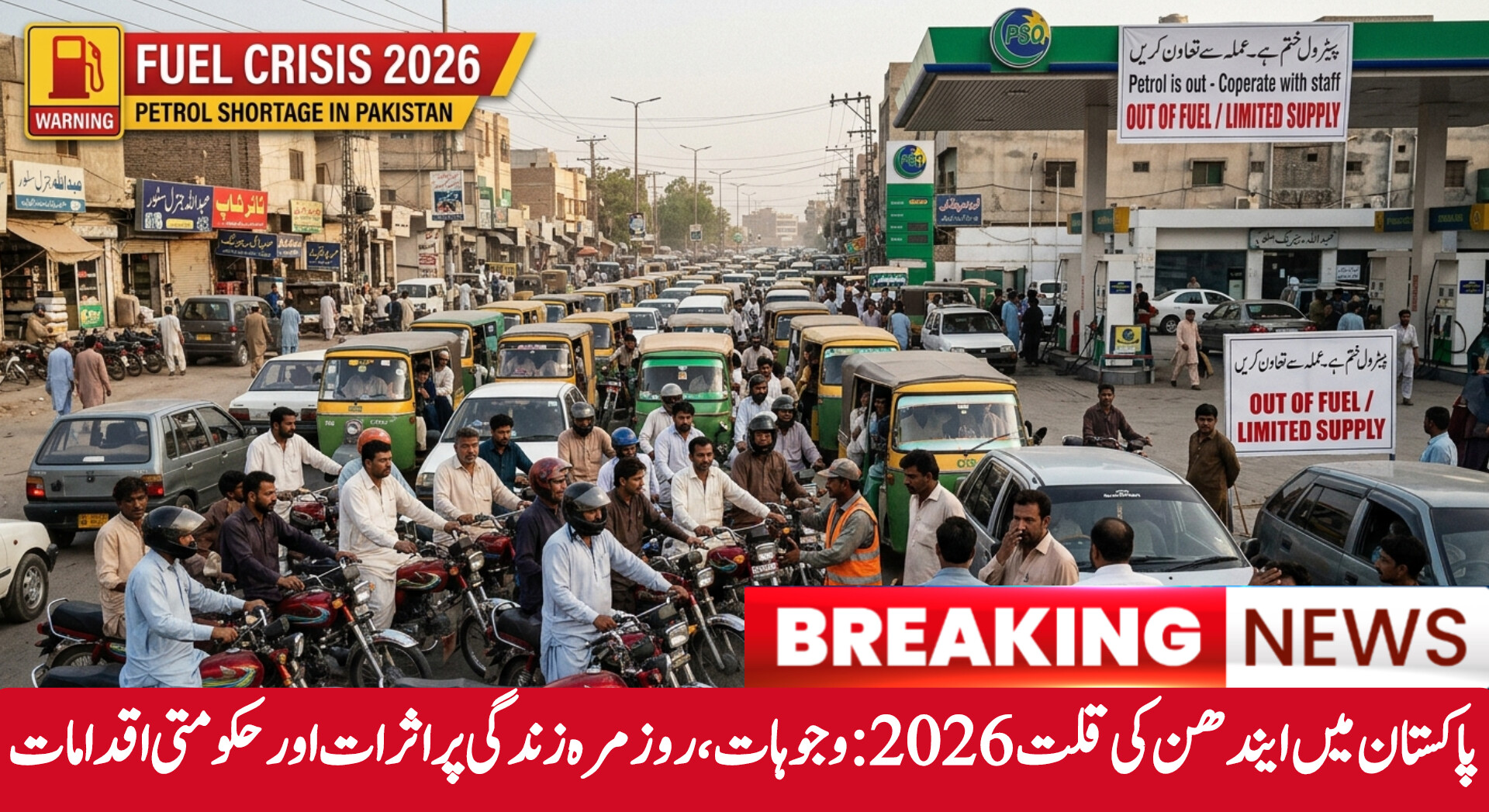
The fuel shortage in Pakistan 2026 has become a serious concern, impacting transportation, businesses, and everyday life. Due to rising global tensions and supply disruptions, petrol and diesel availability has declined in several regions, creating economic and social challenges.
BISP 8171 Program 2026 – Latest Update, Payment, Eligibility & Registration Guide
What is Causing the Fuel Shortage?
The current fuel crisis is largely driven by international and domestic factors:
- Global political tensions disrupting oil supply chains
- Increase in crude oil prices in international markets
- Import limitations due to foreign exchange constraints
- Logistical issues in fuel distribution across provinces
Pakistan relies heavily on imported fuel, making it vulnerable to global market fluctuations. When international supply is affected, local shortages become inevitable.
Impact on Daily Life
The fuel shortage has directly affected the daily routine of citizens:
1. Transportation Problems
Public transport systems are facing delays and reduced operations. Many commuters struggle to find fuel, leading to increased travel costs.
2. Rising Inflation
Fuel prices influence the cost of goods and services. As transportation becomes expensive, food and essential items also become costlier.
3. Business Disruptions
Industries and small businesses that rely on fuel for operations are experiencing slowdowns. Delivery services and logistics companies are particularly affected.
4. Load Shedding Concerns
Fuel shortages can impact power generation, increasing the risk of electricity outages in some areas.
Government Policies and Response
To control the situation, the government has introduced several measures:
- Fuel rationing in some cities
- Priority supply for essential services
- Negotiations with international suppliers
- Subsidy programs for low-income groups
Authorities are also encouraging the use of alternative energy sources like solar power to reduce dependency on fuel imports.
Long-Term Solutions
Experts suggest the following strategies to avoid future crises:
- Investment in renewable energy
- Improved fuel storage capacity
- Diversification of import sources
- Promotion of electric vehicles
These steps can help Pakistan achieve energy stability and reduce reliance on global oil markets.
Role of Global Oil Markets in Pakistan’s Fuel Crisis
Pakistan’s fuel shortage is deeply connected to fluctuations in global oil markets. As a country that imports a large portion of its petroleum, any disruption in international supply chains directly impacts local availability. When major oil-producing regions face political conflicts or production cuts, global oil prices increase. This puts pressure on Pakistan’s foreign exchange reserves, making it difficult to import sufficient fuel.
Additionally, changes in policies by oil-exporting countries and organizations like OPEC can influence supply levels and pricing. When OPEC reduces production, oil prices rise globally, which eventually affects Pakistan’s fuel costs and availability. Therefore, Pakistan’s fuel crisis is not just a local issue but part of a larger global energy dynamic.
Impact of Fuel Shortage on Agriculture and Rural Economy
The fuel shortage in Pakistan 2026 is also significantly affecting the agriculture sector, which is the backbone of the country’s economy. Farmers rely on diesel for tractors, tube wells, and transportation of crops. With limited fuel availability and rising prices, farming costs have increased, reducing profit margins for farmers.
In rural areas, transportation of goods to markets has become more difficult and expensive. This leads to delays in supply chains and can cause food shortages in urban centers. Furthermore, higher fuel costs contribute to increased prices of fertilizers and other agricultural inputs, putting additional pressure on farmers.
If the situation continues, it could impact crop production and food security in the country. Therefore, ensuring fuel availability for the agriculture sector is essential to maintain economic stability and support rural livelihoods.
FOLLOW FOR NEW UPDATES:
WhatsApp’s Channel:
https://whatsapp.com/channel/0029Vb7MYua0gcfLWzto2T01
Facebook Page:
https://www.facebook.com/share/1BPh2YAJ3a/
FAQs (Frequently Asked Questions)
1. Why is there a fuel shortage in Pakistan in 2026?
Due to global tensions, high oil prices, and import limitations.
2. How does fuel shortage affect daily life?
It impacts transportation, increases prices, and disrupts businesses.
3. Are petrol prices increasing due to shortage?
Yes, shortages often lead to price hikes.
4. What is the government doing about it?
Implementing subsidies, managing supply, and negotiating imports.
5. Which sectors are most affected?
Transport, logistics, and small businesses.
6. Is public transport affected?
Yes, reduced availability and higher fares are common.
7. Can fuel shortage cause electricity issues?
Yes, it can affect power generation.
8. How long will the shortage last?
It depends on global supply conditions and government actions.
9. What are alternative energy options?
Solar energy and electric vehicles are key alternatives.
10. How can individuals manage during shortages?
Use public transport, reduce unnecessary travel, and conserve fuel.
Conclusion
The fuel shortage in Pakistan 2026 highlights the country’s dependence on global energy markets. While short-term solutions can ease the crisis, long-term strategies such as renewable energy investment and policy reforms are essential. Managing energy resources efficiently will be key to ensuring economic stability and reducing the impact of future shortages.
Disclaimer
This article is for informational purposes only. Fuel policies, prices, and availability may change based on government decisions and global conditions. Always refer to official sources for the latest updates.
1 thought on “Fuel Shortage in Pakistan 2026: Causes, Impact on Daily Life & Government Response”