
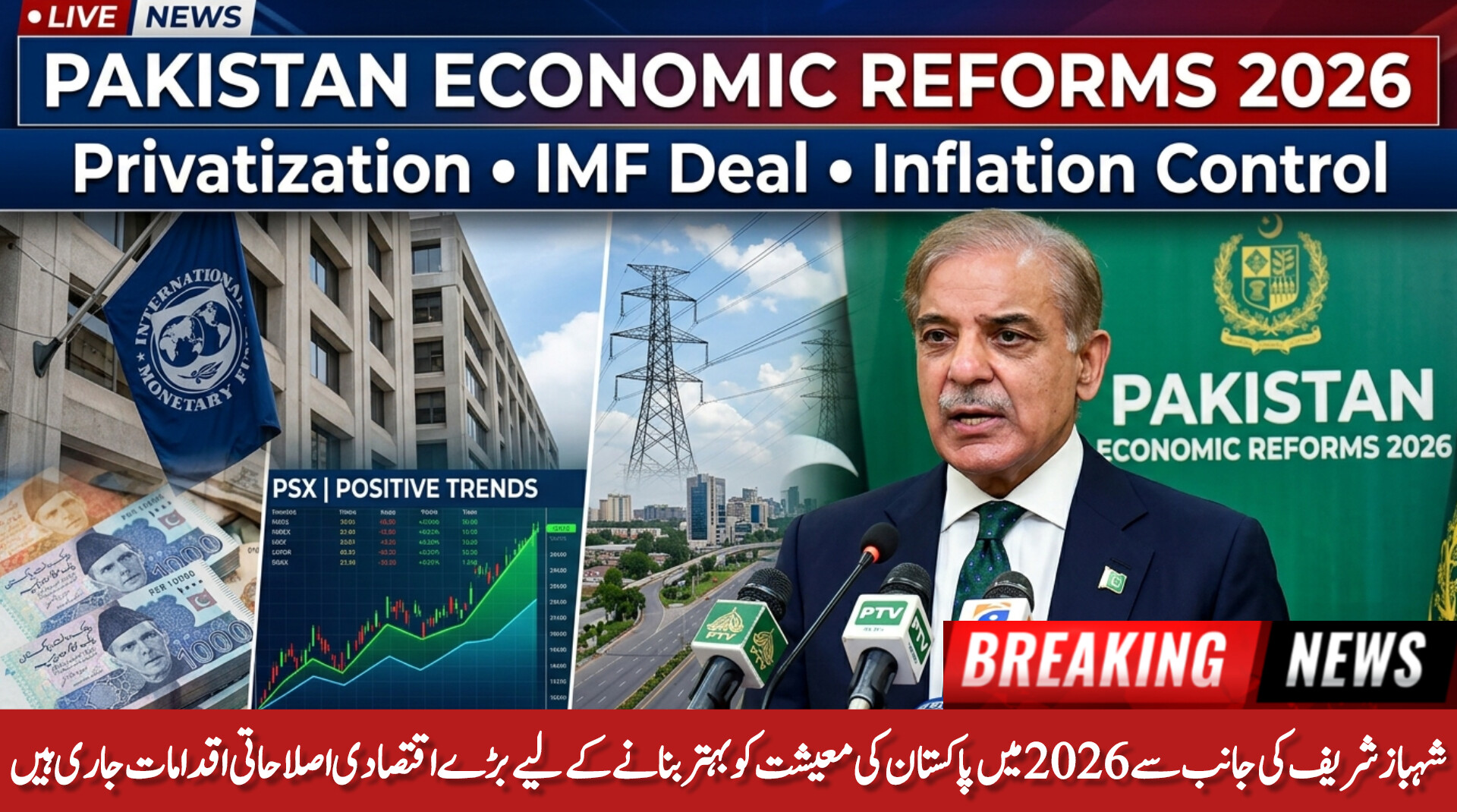
Pakistan Economic Reforms 2026 have become one of the most discussed topics in the country as the government led by Shehbaz Sharif continues efforts to stabilize the economy, reduce inflation, and improve investor confidence. The government is working closely with the International Monetary Fund (IMF) while introducing privatization plans for several state-owned institutions.
These reforms are aimed at strengthening Pakistan’s economy after years of financial pressure, rising inflation, currency depreciation, and growing public debt. According to government officials, the reforms are necessary to ensure long-term economic growth and attract foreign investment.
Babar Azam Injury Update 2026 – Ruled Out of First Test vs Bangladesh, Pakistan Cricket Big Setback
One of the key priorities of the government is the privatization of loss-making state-owned enterprises. Institutions such as Pakistan International Airlines (PIA), power distribution companies, and other public sector organizations are being considered for restructuring or privatization. The government believes that reducing financial losses from these organizations will help decrease the burden on the national budget.
The IMF program also plays a major role in Pakistan Economic Reforms 2026. Pakistan has agreed to implement several economic measures to secure financial assistance and maintain economic stability. These measures include tax reforms, energy sector improvements, subsidy reductions, and better financial governance.
Inflation control remains another major challenge for the government. Over the past few years, citizens have faced increasing prices of food items, fuel, electricity, and essential commodities. The government claims that recent policy decisions are beginning to stabilize inflation and improve market confidence.
Economic experts believe that successful reforms could improve Pakistan’s global image and encourage foreign investors to participate in sectors such as technology, energy, agriculture, and infrastructure. China-Pakistan Economic Corridor (CPEC) projects are also expected to support industrial growth and employment opportunities in the coming years.
However, critics argue that privatization and IMF conditions may increase financial pressure on ordinary citizens in the short term. Higher utility prices and new taxes are among the concerns frequently raised by opposition parties and economic analysts.
Despite these challenges, the government maintains that difficult decisions are necessary to avoid economic crisis and ensure sustainable growth. Officials say reforms are designed to create a stronger economic foundation for future generations.
Pakistan’s business community has shown mixed reactions. Some investors support privatization and structural reforms because they may improve efficiency and transparency. Others worry about political uncertainty and implementation challenges.
The government is also focusing on digitalization and tax collection reforms. Authorities aim to expand the tax base and reduce reliance on external borrowing. New initiatives are being introduced to encourage exports, support local industries, and strengthen foreign exchange reserves.
International financial institutions are closely monitoring Pakistan’s progress. Continued cooperation with the IMF is considered important for maintaining investor confidence and avoiding default risks. The government hopes these reforms will eventually lead to lower inflation, job creation, and stronger economic performance.
In the coming months, Pakistan Economic Reforms 2026 are expected to remain a major political and economic issue. Citizens, businesses, and international partners will continue watching how effectively the government implements its plans and manages economic recovery.
FOLLOW FOR NEW UPDATES:
WhatsApp’s Channel:
https://whatsapp.com/channel/0029Vb7MYua0gcfLWzto2T01
Facebook Page:
https://www.facebook.com/share/1BPh2YAJ3a/
FAQs
1. What are Pakistan Economic Reforms 2026?
Pakistan Economic Reforms 2026 refer to government policies aimed at stabilizing the economy, controlling inflation, increasing revenue, and improving financial governance.
2. Why is privatization important in Pakistan?
Privatization is intended to reduce losses from state-owned enterprises and improve operational efficiency.
3. Which institutions may be privatized?
Organizations such as PIA and some power distribution companies are being considered for privatization or restructuring.
4. What role does the IMF play in Pakistan’s economy?
The IMF provides financial assistance and recommends economic reforms to support stability and debt management.
5. How will reforms affect inflation?
The government says reforms will help reduce inflation over time, although short-term price increases may continue.
6. What challenges does Pakistan face economically?
Pakistan faces inflation, debt pressure, low foreign reserves, and fiscal deficits.
7. Will reforms create jobs?
The government hopes reforms and investment projects will increase employment opportunities.
8. What is the impact on ordinary citizens?
Citizens may face higher utility costs and taxes during the reform process.
9. How does CPEC support economic reforms?
CPEC projects support infrastructure development, industrial growth, and trade opportunities.
10. Are investors interested in Pakistan?
Some international investors are monitoring Pakistan’s reform progress before making major investments.
Conclusion
Pakistan Economic Reforms 2026 represent a significant effort by the government to stabilize the country’s financial system and improve economic growth. Prime Minister Shehbaz Sharif’s administration believes privatization, IMF cooperation, and fiscal reforms are necessary to strengthen the economy and restore investor confidence. While challenges remain, the success of these reforms could shape Pakistan’s economic future for many years.
Disclaimer
This article is for informational and educational purposes only. Economic policies and government decisions may change over time. Readers should verify updates through official government sources and financial institutions before making any financial or investment decisions.
1 thought on “Pakistan Economic Reforms 2026: PM Shehbaz Sharif Pushes Privatization & IMF Targets”