
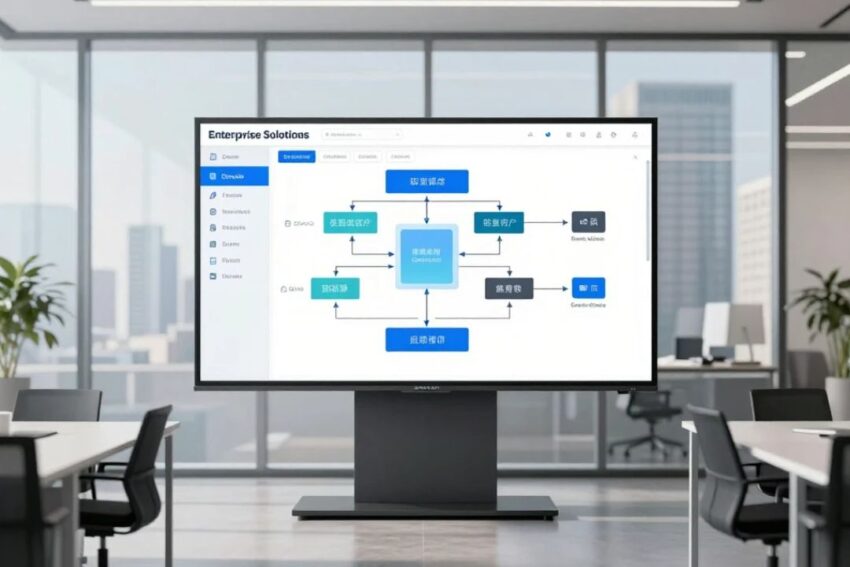
In today’s fast-paced digital landscape, businesses face increasing pressure to improve efficiency, reduce operational costs, and stay ahead of the competition. Managing multiple departments, handling vast amounts of data, and ensuring seamless communication can be challenging without the right technology. This is where enterprise software solutions play a vital role. These advanced software systems help organizations automate workflows, centralize information, improve collaboration, and make data-driven decisions that drive long-term success.
Whether you operate a small business preparing for growth or a multinational corporation managing complex operations, investing in enterprise software can transform the way your organization functions. From finance and human resources to supply chain management and customer relationship management, enterprise software integrates essential business processes into a unified digital platform.
This comprehensive guide explores enterprise software solutions, their benefits, key features, development process, industry applications, emerging trends, and why they are essential for streamlining modern business operations.
What Are Enterprise Software Solutions?
Enterprise software solutions are large-scale applications specifically designed to support the operational needs of organizations. Unlike standard software designed for individual users, enterprise software enables multiple departments to collaborate efficiently while managing business-critical data securely.
These solutions integrate various business functions into a centralized system, allowing employees to access accurate information, automate repetitive tasks, and improve decision-making across the organization.
Common types of enterprise software include:
- Enterprise Resource Planning (ERP)
- Customer Relationship Management (CRM)
- Human Resource Management Systems (HRMS)
- Supply Chain Management (SCM)
- Inventory Management Systems
- Accounting and Financial Software
- Business Intelligence (BI) Platforms
- Document Management Systems
- Project Management Software
- Enterprise Collaboration Tools
Why Businesses Need Enterprise Software Solutions
As organizations grow, managing operations through spreadsheets or disconnected applications becomes increasingly difficult. Enterprise software eliminates data silos and improves communication across departments.
Here are several reasons businesses invest in enterprise software solutions.
Improved Operational Efficiency
Enterprise software automates repetitive tasks, minimizes manual errors, and streamlines business processes. Employees can focus on strategic initiatives instead of routine administrative work.
Centralized Data Management
Instead of storing information across multiple systems, enterprise software provides a centralized database where authorized users can access accurate and real-time information.
Better Decision-Making
Enterprise platforms generate detailed reports and analytics that help management make informed business decisions based on real-time data.
Enhanced Collaboration
Departments can easily share information, communicate effectively, and coordinate projects using integrated enterprise systems.
Scalability
Enterprise software grows alongside your organization, supporting additional users, locations, products, and business processes without compromising performance.
Benefits of Enterprise Software Solutions
Increased Productivity
Automated workflows reduce repetitive tasks, enabling employees to complete projects more efficiently and accurately.
Cost Savings
Although enterprise software requires an initial investment, it reduces long-term operational costs by improving efficiency, minimizing errors, and eliminating redundant systems.
Improved Customer Service
Customer-facing departments gain instant access to customer information, enabling faster responses, personalized support, and improved customer satisfaction.
Enhanced Security
Enterprise software includes advanced security features such as:
- Data encryption
- Multi-factor authentication
- User access controls
- Secure cloud storage
- Regular security updates
- Compliance monitoring
These measures help protect sensitive business and customer information.
Business Process Standardization
Enterprise software ensures consistent workflows and standardized procedures across all departments, improving overall operational quality.
Types of Enterprise Software Solutions
Enterprise Resource Planning (ERP)
ERP systems integrate core business functions into a single platform.
ERP modules typically include:
- Finance
- Inventory
- Procurement
- Manufacturing
- Sales
- Human Resources
- Customer Management
ERP software provides complete visibility into business operations while improving efficiency and reducing duplication.
Customer Relationship Management (CRM)
CRM software helps businesses manage customer interactions throughout the sales lifecycle.
CRM features include:
- Lead management
- Contact management
- Sales tracking
- Customer support
- Marketing automation
- Customer analytics
CRM solutions strengthen customer relationships and improve sales performance.
Human Resource Management Systems (HRMS)
HR software simplifies workforce management through:
- Employee records
- Payroll processing
- Attendance tracking
- Recruitment management
- Performance evaluation
- Benefits administration
HRMS improves employee productivity while reducing administrative workloads.
Supply Chain Management (SCM)
SCM software manages every stage of the supply chain, including:
- Procurement
- Vendor management
- Logistics
- Warehouse operations
- Inventory control
- Distribution
Supply chain optimization reduces costs and improves delivery performance.
Business Intelligence (BI)
Business intelligence platforms transform raw data into meaningful insights through:
- Interactive dashboards
- Performance reports
- Predictive analytics
- Data visualization
- KPI monitoring
BI solutions help executives make informed strategic decisions.
Key Features of Enterprise Software
Professional enterprise software includes several essential features.
Centralized Dashboard
A unified dashboard provides management with real-time insights into business performance.
Workflow Automation
Automation reduces manual tasks, improves consistency, and accelerates business operations.
Cloud Integration
Cloud-based enterprise software enables secure remote access, automatic updates, and flexible scalability.
Mobile Accessibility
Modern enterprise applications support smartphones and tablets, allowing employees to work from anywhere.
Third-Party Integration
Enterprise systems integrate with:
- Payment gateways
- Email platforms
- Accounting software
- Marketing tools
- Inventory systems
- ERP and CRM applications
Advanced Reporting
Comprehensive reports and analytics support data-driven business decisions.
Enterprise Software Development Process
Professional enterprise software development follows a structured methodology.
1. Requirement Analysis
Developers collaborate with stakeholders to understand business processes, objectives, and technical requirements.
2. Planning
The project roadmap includes:
- Timeline
- Budget
- Technology stack
- Development milestones
- Resource allocation
3. UI/UX Design
Designers create intuitive interfaces that improve usability and employee productivity.
4. Software Development
Developers build secure and scalable applications using modern programming languages such as:
- Java
- Python
- C#
- PHP
- JavaScript
- .NET
- Node.js
- Laravel
- React
5. Quality Assurance
Testing includes:
- Functional testing
- Performance testing
- Security testing
- Compatibility testing
- User acceptance testing (UAT)
Quality assurance ensures reliable system performance.
6. Deployment
After testing, the enterprise application is deployed in the production environment with minimal disruption to business operations.
7. Maintenance and Support
Continuous monitoring, updates, bug fixes, and feature enhancements keep enterprise software secure and efficient.
Industries That Benefit from Enterprise Software
Enterprise software supports organizations across various industries.
Healthcare
Healthcare providers use enterprise solutions for:
- Electronic Health Records (EHR)
- Patient management
- Billing systems
- Appointment scheduling
- Telemedicine
Retail
Retail businesses utilize enterprise software for:
- Inventory management
- Order processing
- Point-of-sale systems
- Customer loyalty programs
- eCommerce integration
Manufacturing
Manufacturers improve productivity through:
- Production planning
- Quality control
- Supply chain management
- Warehouse management
- Equipment monitoring
Banking and Finance
Financial institutions rely on enterprise software for:
- Digital banking
- Risk management
- Compliance monitoring
- Payment processing
- Financial reporting
Education
Educational institutions use enterprise platforms for:
- Student information systems
- Learning management systems
- Online admissions
- Examination management
- Faculty administration
Emerging Trends in Enterprise Software
Technology continues to reshape enterprise software development.
Artificial Intelligence (AI)
AI enhances enterprise software through intelligent automation, predictive analytics, virtual assistants, and personalized customer experiences.
Machine Learning
Machine learning enables systems to identify trends, detect anomalies, and improve decision-making over time.
Cloud Computing
Cloud-based enterprise software reduces infrastructure costs while improving accessibility and scalability.
Internet of Things (IoT)
IoT integration enables real-time monitoring of equipment, inventory, and connected devices.
Robotic Process Automation (RPA)
RPA automates repetitive administrative tasks, improving efficiency and reducing operational costs.
Cybersecurity
Advanced cybersecurity features protect enterprise systems from evolving digital threats while ensuring compliance with industry regulations.
How to Choose the Right Enterprise Software Development Company
Selecting the right technology partner is essential for successful implementation.
Consider the following factors:
- Industry expertise
- Technical capabilities
- Portfolio of enterprise projects
- Positive client reviews
- Transparent pricing
- Agile development methodology
- Security best practices
- Strong communication
- Ongoing maintenance services
- Ability to build scalable solutions
A reliable software development company will understand your business goals and create customized enterprise solutions that align with your long-term objectives.
Future of Enterprise Software Solutions
The future of enterprise software lies in intelligent automation, cloud-native technologies, and AI-driven decision-making. Organizations will increasingly adopt predictive analytics, machine learning, and automation to optimize operations and reduce manual workloads. Cloud-based enterprise platforms will continue to dominate due to their flexibility, lower infrastructure costs, and remote accessibility.
Businesses that invest in modern enterprise software today will be better prepared to adapt to market changes, embrace digital transformation, and remain competitive in an increasingly technology-driven world.
Conclusion
Enterprise software solutions have become a cornerstone of modern business success. By integrating critical business processes into a unified platform, these solutions improve operational efficiency, reduce costs, enhance collaboration, and enable data-driven decision-making. Whether your organization operates in healthcare, finance, manufacturing, retail, or education, enterprise software provides the scalability and flexibility needed to support long-term growth. Partnering with an experienced enterprise software development company ensures your business receives secure, customized, and future-ready solutions that streamline operations and create a strong foundation for sustainable success.